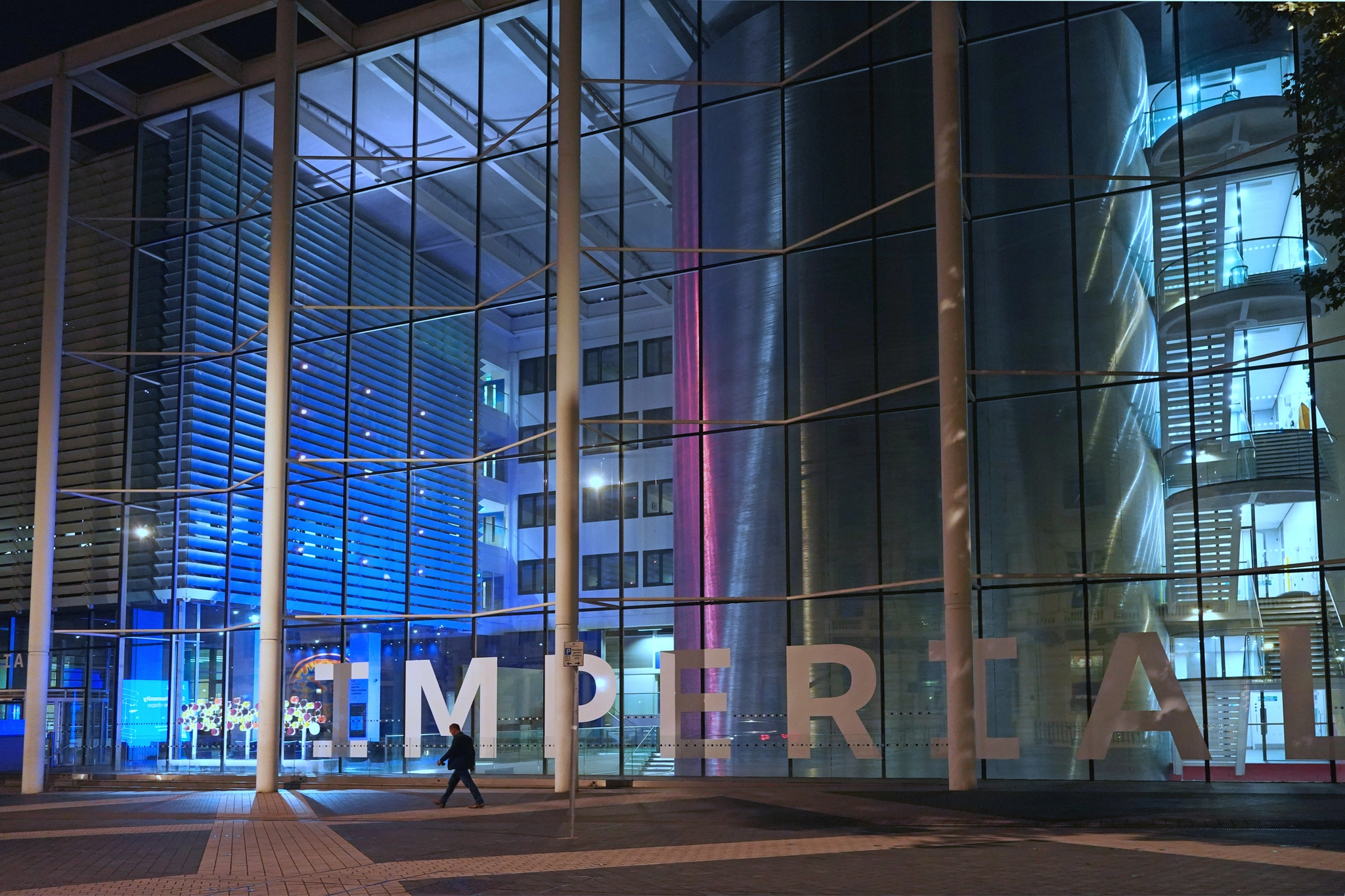
MBA Success Story: Frédéric John, Imperial College Business School
When Frédéric John decided it was time to move city, change industry and swap job roles, he realised that studying for an MBA could be the answer to all three aspirations
Tell us a little bit about yourself and your career to date
I began my career as a financial consultant at Deloitte. It was the perfect place to acquire professional best practices. A few years later, I decided to start an MBA at Imperial College London in 2018 to get closer to sustainability, relocate in London and fast-track my career.
I stayed a few years in London as a sustainable mobility consultant working for a well-renowned boutique strategy firm. I co-wrote some of the most influential studies and reports published in this sector at the time, including a book about autonomous vehicles that led to my major achievement as the co-initiator of PAVE Europe, an automated vehicle coalition.
I relocated back to Brussels to create D-Carbonize with my current co-founder. Since 2021, I have also been teaching Sustainable Mobility in Cities at the Polytechnic University of Mons. The rest of my free time is dedicated to volunteering activities related to climate change awareness, such as Climate Fresk.
Explain your current role in more detail
As a COO at D-Carbonize I lead the operations, which means I supervise all of our consulting assignments and am in charge of our carbon accounting platform development. I have led more than 200 carbon footprint assessments so far. As a co-founder, I am also involved in strategic orientation and business development.
As a university lecturer, I teach international students from an Erasmus Mondus master’s focused on Smart Cities. It is a privilege to support the next generation of leaders in becoming more aware of how they can make an impact in the fight against climate change.
Why did you want to study for an MBA and why did you choose that particular school?
I am from the generation born under the pressure of climate change. Being a financial consultant was certainly one of the best ways to become a well-rounded and efficient professional, but that career did not have the impact on society that I was looking for.
An MBA came as the next natural step therefore, as it ticked the three boxes you should typically consider to decide whether an MBA is a good fit: I wanted to relocate, I was looking for a change of industry and I also wanted a change of role.
Imperial College Business School immediately joined my shortlist of where I wanted to study. The university is among the best ranked in the world and was actively developing a sustainability track in its MBA, which was rare enough among universities at that time to be attractive.
What is the most interesting thing you learnt from your MBA?
The power of networking. I probably shouldn’t say this, but some of the best value to be found on an MBA takes place outside the classroom. During my time as a student, I connected with hundreds of professionals from the industry I targeted to build a robust network that led me to achieve my objectives. It is during one of the hundred or so coffee chats that I met the person who would become my future boss and who still today is a source of inspiration. It’s quite incredible the power a student has with a student email address from a well-regarded university.
What were some of the challenges you faced when studying for an MBA?
Where to invest my time. When you are exposed to many opportunities, it is important to learn to focus on what will make the most impact. The first couple of months were also intimidating for me in terms of socialising, since it was my first international experience. But my situation was no exception. The school’s staff works hard to propose social activities and ice breakers to blend into the cohort. Syndicate groups also help to build a close circle of friends (I am still very close to some of them).
How has the MBA made a difference to your career path?
An MBA is an maturity accelerator. I felt like I had blinders around my eyes before this experience and suddenly the world became much clearer. “The sky is the limit” is what I discovered. With this degree in my pocket and experience in my mind, I became more confident, more relaxed in thinking I could do great things without feeling like an impostor.
In what ways have you taken what you have learnt in your MBA into the organisation where you work?
Dealing with the human factor. Running a start-up is above all being able to get the best out of your (very diverse) team, which requires me to show mental flexibility and adaptability in communication.
What advice would you give to someone who is thinking about studying for an MBA?
Make sure this experience is for you. An MBA is demanding and expensive, so you need to have good reasons to decide to do it. In my opinion, these are the three key considerations:
- Do you want to relocate?
- Do you want to change job?
- Do you want to change industry?
If there’s at least a “yes” to one of these questions, then an MBA might be a good fit.
What are the next steps for you on your career journey?
D-Carbonize is a fantastic chapter in my career and I already know it’s not the end of the book. Since my MBA, my red thread has been to find the place where I can make an impact for our world. It started by improving how people move in cities to how to mitigate climate change nowadays. I can’t tell yet what my next chapter will involve, but what I am certain is that my MBA ‘aura’ and the skills developed during that time are sure to play a hugely important role.